
OCT Screening in Houston: A Closer Look at Your Eye Health

OCT Screening in Houston: A Closer Look at Your Eye Health

OCT Screening in Houston: A Closer Look at Your Eye Health

OCT Screening in Houston: A Closer Look at Your Eye Health

OCT Screening in Houston: A Closer Look at Your Eye Health

OCT Screening in Houston: A Closer Look at Your Eye Health

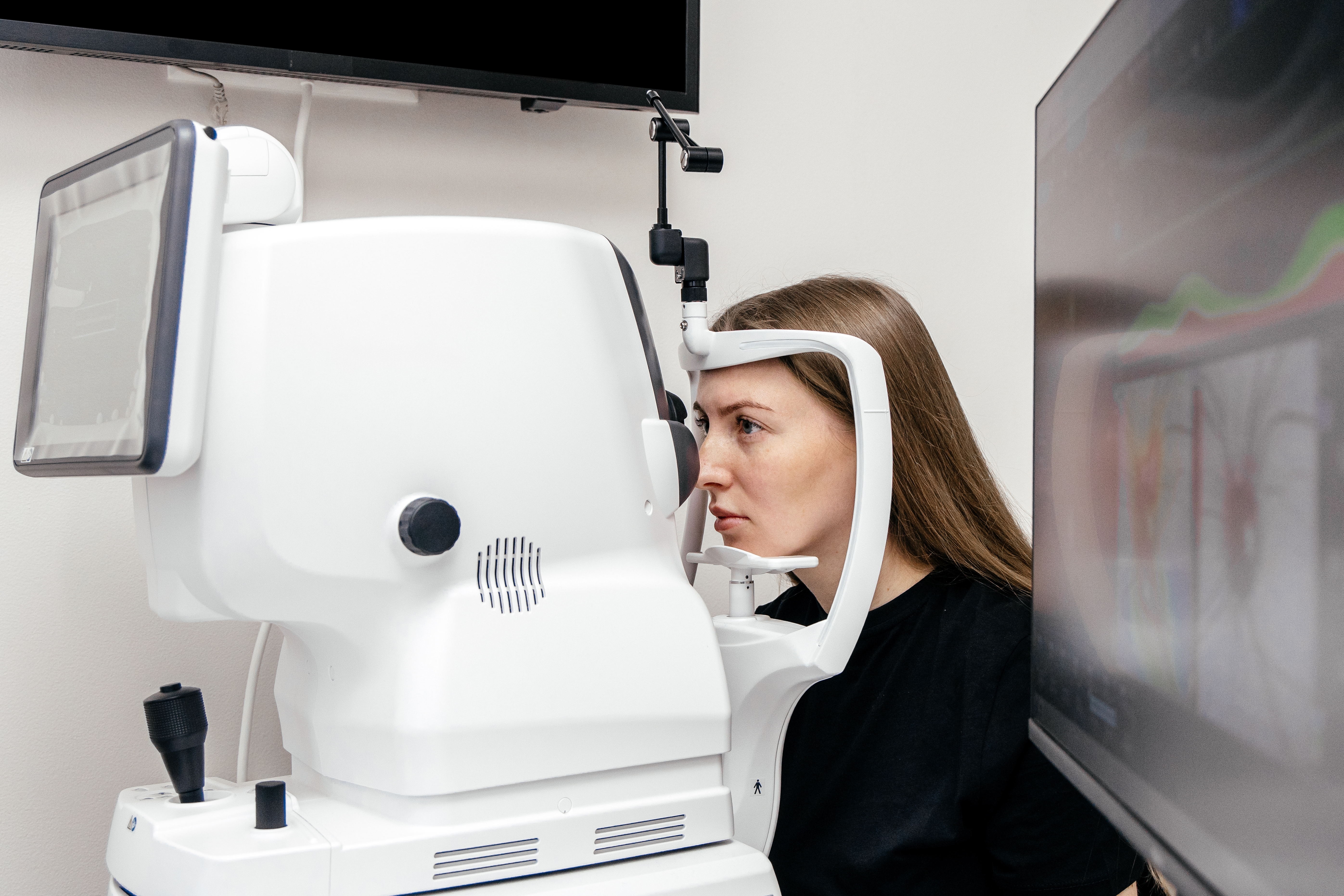
Clear vision does not always mean your eyes are free from disease. Some eye conditions develop gradually, with few noticeable symptoms in their early stages. At Memorial Vision in Houston, TX, we use optical coherence tomography (OCT) screening to take a detailed look at the structures inside your eyes. This advanced imaging technology helps us identify changes that may not be apparent during a vision check alone.
What Is OCT Screening?
Optical coherence tomography uses light waves to create detailed, cross-sectional images of the retina and optic nerve. The retina is the light-sensitive tissue at the back of your eye, while the optic nerve carries visual information to your brain.
Unlike an X-ray, an OCT scan does not use ionizing radiation. It is noninvasive and allows us to examine different layers of eye tissue without touching the eye. OCT complements a comprehensive eye exam by providing information that helps guide further evaluation and monitoring.
What Eye Conditions Can an OCT Scan Help Detect?
OCT screening is especially valuable for assessing subtle structural changes associated with certain eye diseases, including:
· Glaucoma: OCT can measure changes in the optic nerve and retinal nerve fiber layer that may indicate damage.
· Macular Degeneration: Detailed images of the macula can reveal changes or fluid associated with age-related macular degeneration.
· Diabetic Eye Disease: OCT can identify retinal swelling, including diabetic macular edema, that may threaten central vision.
· Other Retinal Conditions: Imaging can help evaluate concerns such as macular holes or changes involving the layers of the retina.
OCT findings are interpreted alongside your eye examination and, when necessary, other tests. A scan alone does not confirm or rule out every eye condition.
Who May Benefit From OCT Screening in Houston?
We may recommend OCT imaging if you have diabetes, a family history of glaucoma, certain retinal concerns, or findings during your eye exam that call for a closer look.
OCT can also be useful for establishing a baseline image to compare against future scans. Because some eye diseases progress without obvious symptoms, reviewing these images over time can help us recognize changes earlier and determine whether additional testing or care is needed.
Not everyone requires OCT imaging at every visit. We recommend testing based on your eye health, risk factors, and clinical findings.
What to Expect During an OCT Scan
The test is straightforward and comfortable. You will rest your chin and forehead against the imaging device and focus on a target while it captures detailed images of your eyes.
An OCT scan is painless, does not touch your eye, and typically takes about 10 minutes in our office. Whether your eyes need to be dilated depends on the rest of your examination. Afterward, our team can review the images with you, explain any findings, and discuss appropriate follow-up care.
Schedule a comprehensive eye exam at Memorial Vision in Houston, TX, and ask whether OCT screening is right for you by calling (281) 496-1635.


© 2026 Memorial Vision - All Rights Reserved - Privacy Policy - Accessibility Statement
Powered by
